House of Guilt How to Survive Guilt
Hide craft, Close Call timing, and audio tells for ALPHA chases.
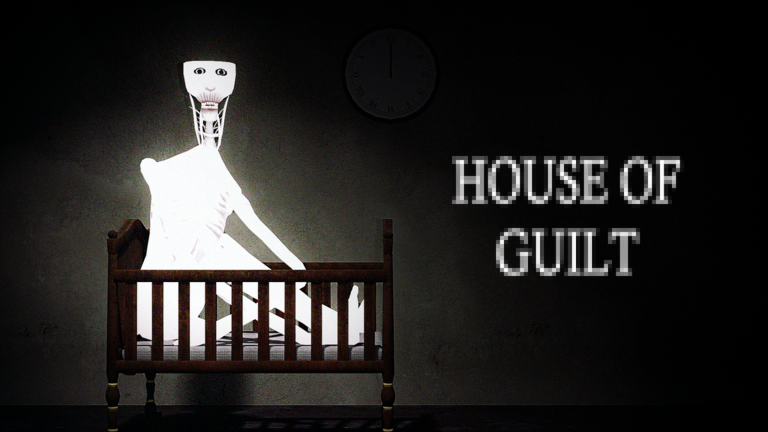
Surviving Guilt is the skill that decides whether House of Guilt feels fair or impossible. This guide focuses on hiding, Close Call habits, audio cues, and decision-making when the entity is near. Pair it with the Guilt entity overview, the Tier List for cover ranks, and the Full Walkthrough when you are ready to progress objectives under pressure. For a visual pacing reference, watch the gameplay clip on Getting Started.
House of Guilt [ALPHA] by OP horror experiences is a survival/escape horror loop: investigate, get trapped in long-lost memories, and escape. Guilt is the pursuit fantasy. The character originally comes from DoctorNowhere (The Boy and the Bath), but this game’s story is not canon. Learn the Roblox implementation’s tells, not external lore assumptions.
Mindset before mechanics
- Panic sprinting is a trap. Open-hall sprints create noise, bad camera angles, and no plan.
- Hide early, not late. If you wait until Guilt is in the same doorway, most closets fail.
- One good hide beats three mediocre jukes. Especially while learning for Close Call.
- Deaths are data. First Blood is common; what matters is whether the next attempt changes rooms or timing.
Audio cues: your real early-warning system
Visuals lie in dark ALPHA lighting. Audio is steadier—if you set it up correctly (Controls).
Listen for
- Sudden stingers or layered cues when threat state rises.
- Footstep intensity changes as distance closes.
- Teammate screams / death sounds that telegraph which wing is unsafe.
- Interaction noises (doors, objectives) that may pull Guilt toward your area.
Practical audio rules
- Use headphones.
- Lower music relative to effects if your mixer allows.
- Do not talk over critical listens in voice chat during objective commits.
- When unsure, stop moving for two seconds and identify direction before choosing a hide.
- After a loud teammate death, assume Guilt may rotate toward residual noise and pre-hide.
Match quiet movement habits to what you saw in early gameplay sessions, then refine room-by-room.
Hide fundamentals that earn Close Call
Close Call rewards surviving a hide while Guilt is genuinely nearby. That means:
- You entered cover before the instant of discovery.
- You stayed still through the pressure window.
- You exited only after the threat rotated away—not the second the silhouette passes.
Pre-hide checklist
- Break line of sight around a corner or furniture volume.
- Choose an S/A-tier spot from the Tier List when possible.
- Avoid shared closets packed with five panicking players.
- Face a direction that lets you peek safely if the game camera allows.
- Commit—hot-swapping hides mid-search often gets you caught.
During the pressure window
- Minimize camera thrashing that might bob your character.
- Resist the urge to “check” too early.
- If Guilt parks outside your volume, wait; impatience converts Close Call into First Blood.
- In groups, one player peeking can doom everyone—assign who is allowed to look.
When Guilt is near: decision tree
| Situation | Better play | Worse play |
|---|---|---|
| Audio rising, not visible yet | Enter known S-tier cover | Keep looting in the open |
| Visible at long hallway | Break LOS, then hide | Sprint straight away down the same hall |
| Visible at close range mid-objective | Abort objective, break LOS | Finish the channel “real quick” |
| Guilt leaving your room | Stay hidden extra seconds | Instantly re-enter the open |
| Teammate being chased past you | Stay quiet in cover | Jump out to “help” and widen aggro |
Movement discipline between hides
Survival is not only closets. Pathing between safe nodes matters:
- Prefer routes with mid-path cover options.
- Cross atriums as a sprint with a destination hide already chosen.
- Do not hug Guilt’s last known room hoping for loot—rotate wings.
- After a near miss, change floors if possible so patrol memory (player-side) resets.
Solo vs group survival differences
Solo (Lone Survivor practice)
- You control noise completely.
- You must self-scout; spend more time listening at corners.
- Objective commits are scarier—clear the room first every time.
Group (up to 30)
- Callouts help, but stacked noise attracts disaster.
- Split into explorer + watcher roles during power/hatch pushes.
- Never all hide in one meta closet; diversify so one discovery does not wipe the run.
Using (and not using) helpers
ESP and fullbright can make Guilt easier to track, but they risk bans and can erase lighting tells you should learn. If you experiment, do it on an alt after reading Scripts and ESP Survival. Console players generally cannot run PC executors anyway—this guide is enough.
Training drills (10–15 minutes)
- Audio-only drill — play a public server with the goal of identifying threat direction before seeing Guilt.
- Two-spot drill — pick two hides on different floors; rotate only between them while objectives are ignored.
- Abort drill — start a power interaction and intentionally abort on first scary audio; practice leaving cleanly.
- Close Call drill — prioritize one clean nearby hide survival over progress.
- Debrief — after death, name the room and the mistake out loud.
Connecting survival to escape objectives
You survive so you can finish the ALPHA structure: restore power, open the hatch, then attempt Teddy Escape Ending. Players who only juke forever never earn Power Restored, Hatch Opened, or the rare teddy badge. Set a rule: after two successful Close Call-quality hides, push an objective node.
Common survival failures
- Hiding in LOS of the doorway Guilt enters.
- Choosing C-tier cover because it was closest.
- Re-peeking instantly after a pass.
- Following teammates into a dead-end wing.
- Ignoring that ALPHA pathing may change after the November update—relearn after patches (Updates).
Related pages
- Getting Started — onboarding loop
- Full Walkthrough — when to push objectives
- Tier List — ranked hide spots
- Players — entity context and hunt notes
- Controls — audio/graphics setup
- All Badges — Close Call within the full ladder
- Speedrun & Solo — deathless and solo constraints
Master quiet decisions. Guilt rewards patience more than hero sprints, and Close Call is the badge that proves you understood the pressure window.
Frequently Asked Questions
Quick answers about endings, Guilt, and escaping the house.
How do I earn the Close Call badge?
Survive a hide while Guilt is nearby. Enter cover early, stay still through the pressure window, and leave only after the threat moves on.
What is the most important survival tool?
Audio. Headphones and disciplined listening beat raw sprint speed in dark ALPHA rooms.
Should I hide with my whole team in one closet?
No. Diversify hide spots. One discovery can wipe a stacked group and create chaotic noise.
When should I abort an objective?
Abort as soon as Guilt is close or audio spikes hard. Dying on a switch teaches less than resetting and returning.
Does ESP replace learning hides?
No. ESP can fail or get you banned. Learn S-tier cover and audio cues so you can survive on a clean client.